
The Hidden Beauty of Newton’s Laws: Why They Still Rule the Universe
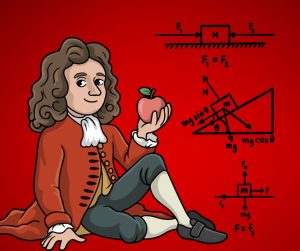
Physics often begins with three simple statements — Newton’s Laws of Motion. Though introduced more than three centuries ago, these principles remain the foundation of how we understand motion, force, and the interaction between objects. Their simplicity hides a profound beauty that continues to shape modern science and technology.
1. The First Law — The Law of Inertia
Every object continues in its state of rest or uniform motion unless acted upon by an external force. This law explains why a soccer ball doesn’t move until kicked or why you feel a jolt when a bus suddenly stops. It reminds us that motion and rest are natural states, not opposites.
2. The Second Law — Force and Acceleration
The famous equation F = ma shows that force is what changes an object’s motion. Whether it’s launching a rocket or pushing a bicycle, this law defines how much effort is needed to produce acceleration. It is the mathematical heart of mechanics, linking energy, mass, and motion.
3. The Third Law — Action and Reaction
“For every action, there is an equal and opposite reaction.” From walking to flying, this principle explains countless daily phenomena. It also governs advanced technologies such as jet propulsion and robotics.
Beyond the Classroom
Newton’s laws are not just textbook ideas; they are living tools engineers and scientists still rely on to design spacecraft, vehicles, and even virtual simulations. Their timeless relevance reminds us that understanding the basic rules of nature is the key to innovation.
In essence, Newton’s laws are more than physics — they are the language of motion, the logic of balance, and the foundation of every step we take in exploring the universe.
IN TO THE PHYSICS
Cumilla Women’s College Road, Cumilla