
Dynamics
Dynamics is the branch of mechanics that deals with the motion of objects and the forces causing that motion. Unlike kinematics, which describes motion without considering its cause, dynamics explains why objects move or change their state of motion. It forms the foundation of classical physics and is essential for understanding real-world motion.
Dynamics is the branch of mechanics that explains motion together with the forces responsible for that motion. It focuses on why an object moves, stops, or changes direction.
Force is a push or pull that can change the shape, size, speed, or direction of an object. Force is a vector quantity, so it has both magnitude and direction. Forces can be contact forces such as friction, tension, and normal reaction, or non-contact forces such as gravitational, electric, and magnetic forces.
According to Newton’s first law of motion, an object remains at rest or continues to move with uniform velocity in a straight line unless acted upon by an external unbalanced force. This law explains the concept of inertia, which is the tendency of a body to resist any change in its state of motion. The inertia of a body depends on its mass.
Newton’s second law of motion states that the rate of change of momentum of a body is directly proportional to the applied force and occurs in the direction of that force. This law leads to the mathematical relation F = ma, where force equals mass multiplied by acceleration. It explains how different forces produce different accelerations in objects.
Newton’s third law of motion states that for every action, there is an equal and opposite reaction. The action and reaction forces act on different bodies and therefore do not cancel each other. This law explains phenomena such as walking, swimming, recoil of a gun, and rocket motion.
Momentum is defined as the product of mass and velocity of a body. It is a vector quantity and depends on both the mass and the direction of motion of the object. The SI unit of momentum is kilogram meter per second.
The law of conservation of momentum states that the total momentum of an isolated system remains constant if no external force acts on it. This principle is widely used to analyze collisions, explosions, and rocket propulsion.
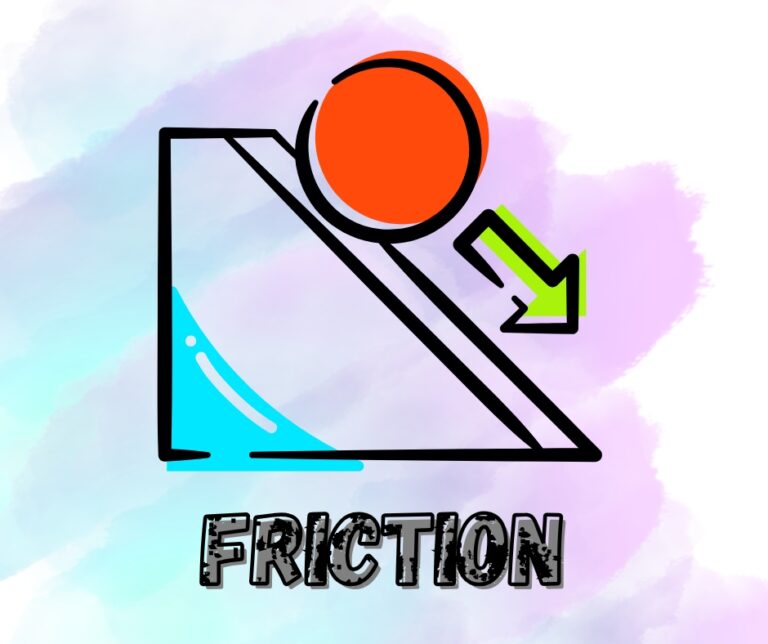
Friction is the force that opposes the relative motion between two surfaces in contact. It always acts opposite to the direction of motion or intended motion. Friction may be static, kinetic, or rolling in nature. Although friction causes energy loss and wear, it is essential for walking, writing, and the movement of vehicles.
Circular motion occurs when an object moves along a circular path. Even if the speed remains constant, the velocity continuously changes due to change in direction. A force called centripetal force acts toward the center of the circular path and keeps the object moving in that path. This concept explains the motion of satellites, planets, and rotating objects.
Dynamics plays an important role in daily life and modern science. It helps in understanding vehicle safety systems, sports activities, engineering designs, transportation systems, and space technology. A strong understanding of dynamics is essential for success in higher secondary physics and advanced scientific studies.
The law of conservation of momentum states that the total momentum of an isolated system remains constant if no external force acts on it. This principle is widely used to analyze collisions, explosions, and rocket propulsion.
The law of conservation of momentum states that in an isolated system, where no external force acts on the system, the total momentum remains constant over time. This means that the combined momentum of all objects before an interaction is exactly equal to their combined momentum after the interaction, regardless of the nature of the interaction. Momentum, being the product of mass and velocity, can change for individual objects, but the overall momentum of the system as a whole does not change. This principle is extremely important in physics and is widely applied to analyze various phenomena such as elastic and inelastic collisions, explosions where objects move apart from rest, and rocket propulsion, where a rocket moves forward by ejecting gases backward.
IN TO THE PHYSICS
Cumilla Women’s College Road, Cumilla